Bedrock Foundation Foundation evaluation and repair, Colorado Springs, CO
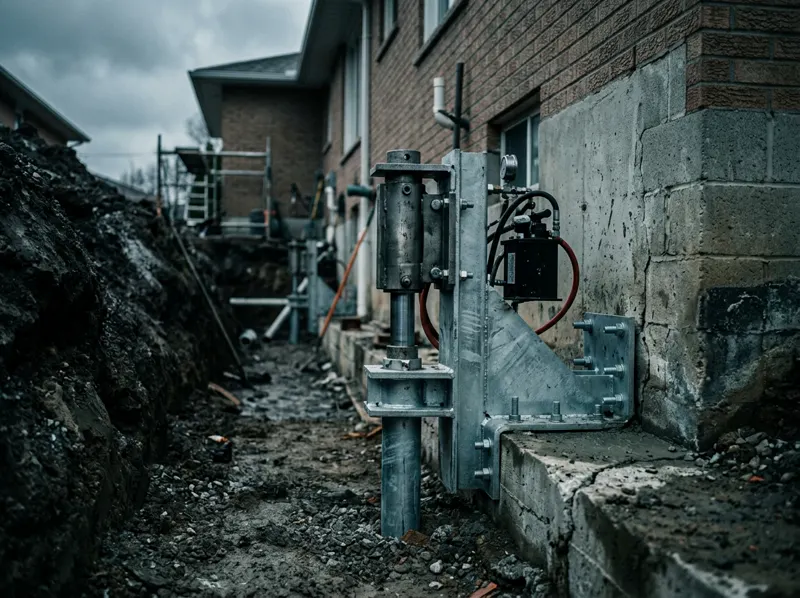
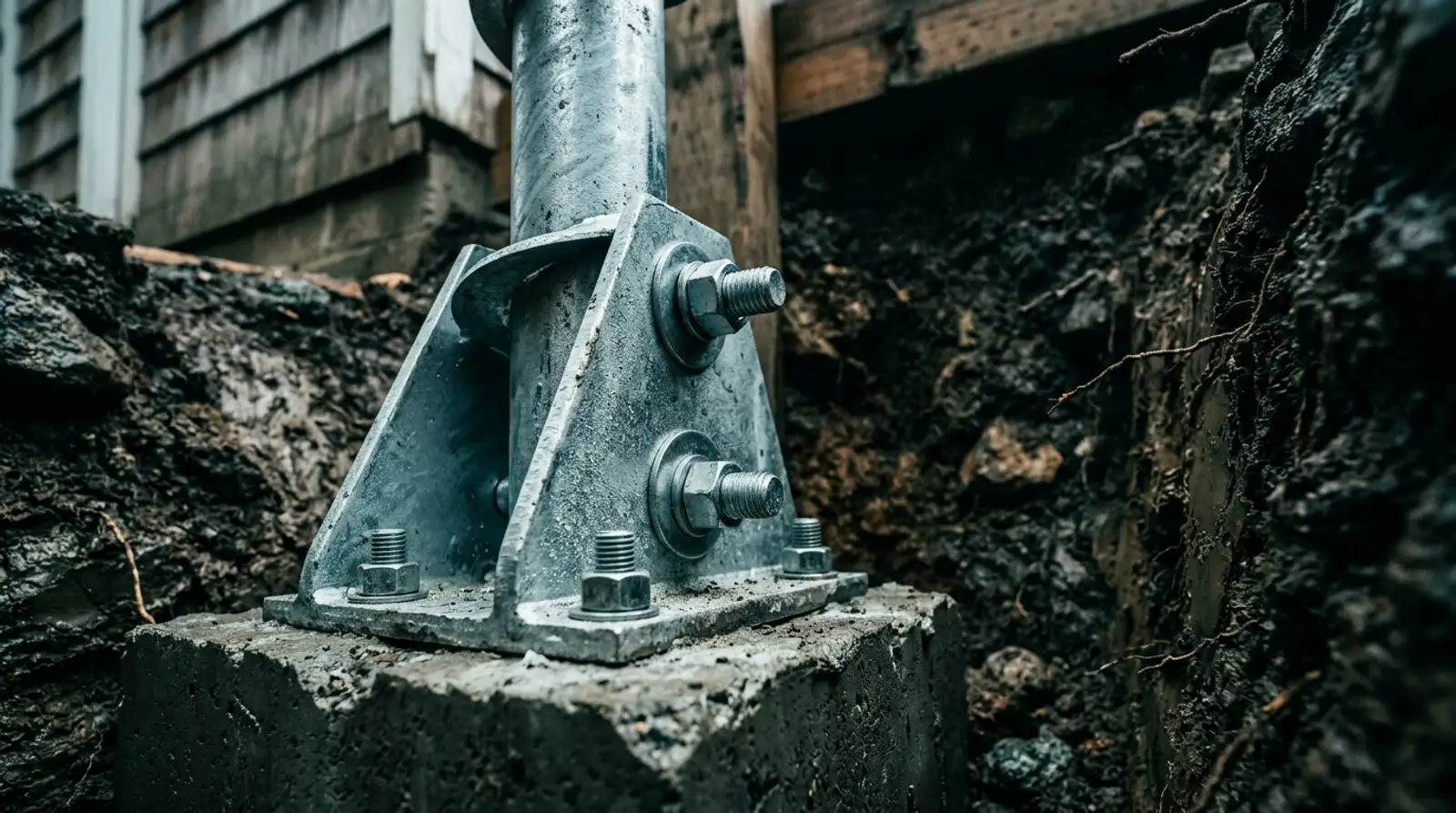
A newly installed galvanized steel foundation pier bracket bolted to a concrete footing in an excavated trench beside a home

Cracks don't fix themselves. We do.

Colorado Springs foundation repair, backed by a licensed engineer. It starts with a free written evaluation report, the document an insurer or a buyer will ask for.

Free written evaluation report, not a sales quote

Request the report

No cost, no pressure. We inspect, then send a written evaluation report, the document an insurer or a buyer will ask for.

Or call us at (719) 555-0148.

4.9 rating, 438 reviews 1,900+ foundations stabilized Licensed PE reviews every plan Transferable lifetime warranty

How we read a foundation, and what we do about it

Everything below is what goes into a Bedrock evaluation: how we diagnose the crack you can see, the repairs we specify, and the written report you keep.

Read the crack

Pick the pattern closest to what you are seeing. The verdict is what our engineer would tell you on the first visit.

Hairline vertical

Monitor
What it means
Thin vertical cracks from the concrete curing and shrinking. Almost always cosmetic.
What we do
Seal, photograph, and re-measure in twelve months. No piers. We say so in writing.
What we measure
Width under 1/16 in, no offset

What we fix

Five ways a Front Range foundation goes wrong, each with the method we specify, when it applies, and what we warrant.

Foundation Repair

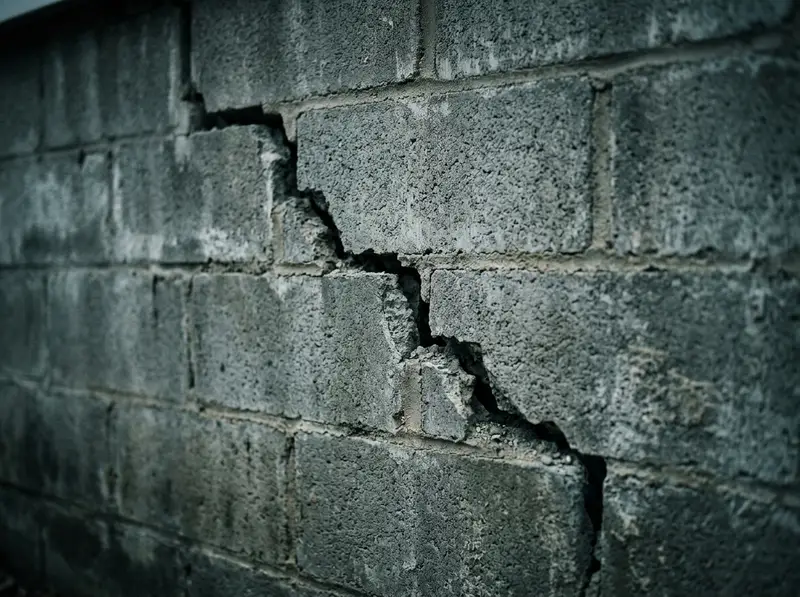
Stair-step cracks, doors that stick, a floor that slopes, these are symptoms of a foundation on the move. We find the cause and stabilize it for good.
Foundation Repair
Fig. Stair-step crack following mortar joints, block wall. Differential movement.
MethodEngineer-specified stabilization matched to the cause: piers, anchors, or drainage
When it appliesStair-step cracks, sticking doors, a floor that slopes, gaps at trim
WarrantyTransferable lifetime
Time on siteTwo to four days on most homes

Push & Helical Piers

When soil can't carry the house anymore, piers transfer the load to strata that can. It's the permanent answer to settling, not a patch.

Push & Helical Piers
Fig. Helical pier bracket set below the active clay zone. Depth measured, not guessed.
MethodSteel push piers or helical piers driven to verified load-bearing strata
When it appliesSettlement, a sinking corner, cracks that widen season to season
WarrantyTransferable lifetime on every pier
Time on siteOne to three days, exterior access where possible

Basement Waterproofing

Water in the soil is what makes it swell and shrink. Control the water and you protect the foundation, a dry basement is structural, not just comfortable.

Basement Waterproofing
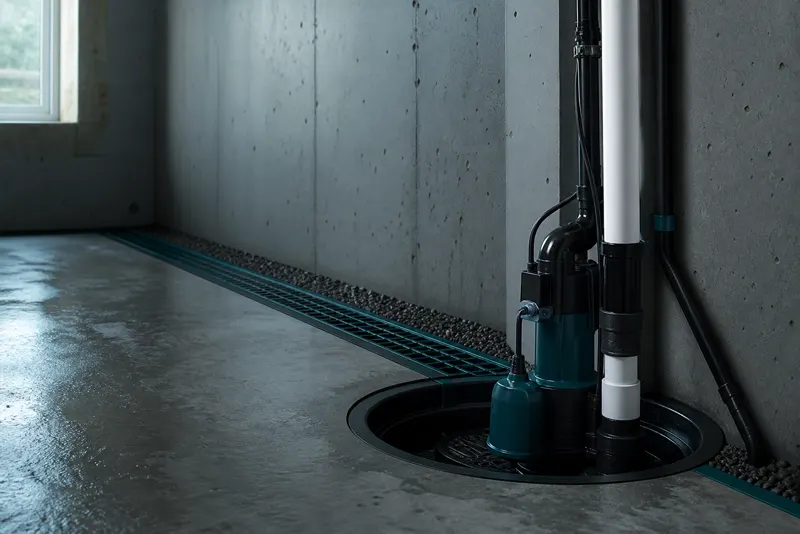
Fig. Perimeter drain and sump basin, interior install. Water leaves before it swells the soil.
MethodInterior perimeter drain to a sump with battery backup, wall sealing, grading fixes
When it appliesSeepage, damp walls, efflorescence, water after spring storms
WarrantyTen years on the drainage system
Time on siteTwo days for a typical basement

Crawlspace Encapsulation

An open crawlspace pulls moisture into the house and lets the floor sag. Encapsulation seals it, dries it, and supports it.

Crawlspace Encapsulation
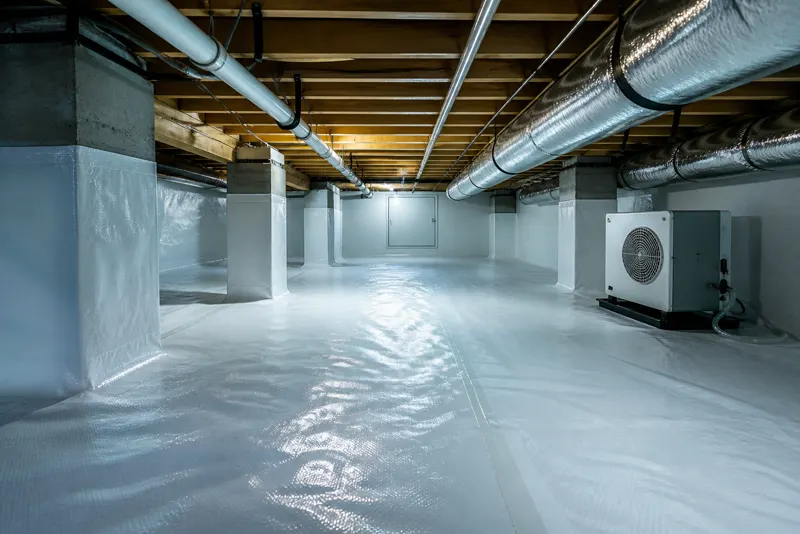
Fig. Encapsulated crawlspace with jacks in place. Dry, sealed, supported.
MethodSealed vapor barrier, support jacks on stable footings, dehumidification
When it appliesSagging or bouncy floors, musty air upstairs, moisture on framing
WarrantyTen years on the liner, lifetime on jacks
Time on siteOne to two days

Concrete Lifting

A sunken slab is a trip hazard and a sign the soil beneath washed out. We lift it back with injected polymer, no tear-out, cured in hours.

Concrete Lifting
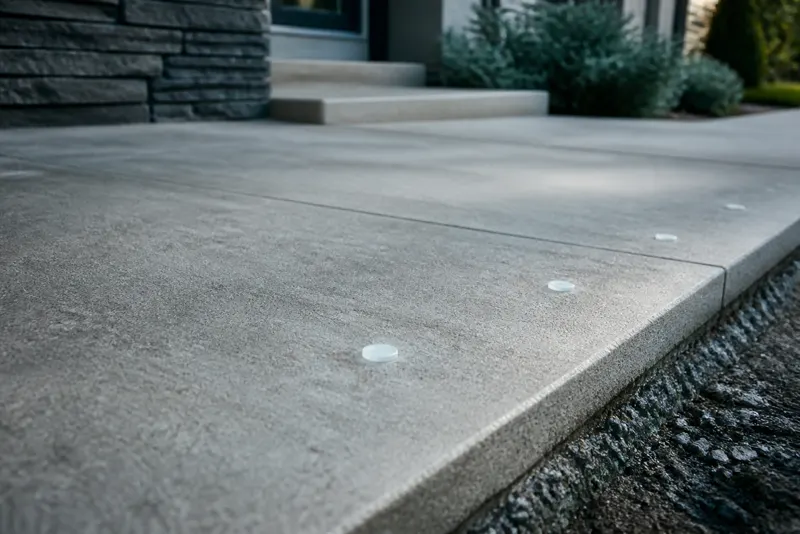
Fig. Releveled slab after polymer lift. Ports patched, no tear-out.
MethodPolyurethane injection through small ports, void filled, slab lifted level
When it appliesSunken driveways, walks, patios, garage and basement slabs, trip edges
WarrantyFive years on the lift
Time on siteA few hours, usable the same day

Pier section

Not every crack means piers. When it does, this is what a pier does under your house: it carries the load through the clay that moves to the strata that does not.

Fig. Pier section, typical Depth to bearing, measured
Piers transfer the load through expansive clay to strata that can carry it. Bearing is verified by drive pressure and recorded in the report.
Expansive clay
Swells with water, shrinks when dry. The layer that moves your house.
Transition and fill
Disturbed soil from the original build. Rarely reliable bearing.
Load-bearing strata
Where the pier stops. Depth is verified by the drive pressure, then recorded in your report.

The written report

Most companies give you a verbal "you need piers." You get a document that stands up to an insurer, a home inspector, or a buyer.

Foundation Evaluation Report

Prepared for the homeowner. Reviewed by a licensed professional engineer. Free of charge.

  1. Property and elevation surveyFloor elevations mapped room by room so movement is measured, not guessed.
  2. Crack map with photographsEvery crack located, sized, and photographed with a scale reference.
  3. Soil and drainage findingsWhat the soil on your lot does with water, and where the water is going now.
  4. Engineer assessmentA licensed professional engineer reviews the findings and states the cause.
  5. Recommended repair and scopeThe fix, the materials, the pier count and depth if piers are needed.
  6. Warranty termsWhat is covered, for how long, and that it transfers to the next owner.
Yours to keep and to hand on. The warranty transfers with the house. Request yours

Field notes

What homeowners wrote after the work.

  • Karen M., Colorado Springs, CO

    The written report was the difference, our insurer accepted it and the buyer’s inspector had nothing to add. Doors close right again.

  • Tom B., Monument, CO

    They explained the helical piers and the soil in plain English, then did exactly what the report said. No surprises.

  • Alicia R., Pueblo, CO

    Basement stayed dry through the spring storms for the first time in years. They fixed the water, not just the crack.

  • Greg D., Fountain, CO

    Lifted the driveway in an afternoon. Cured by evening, looks level, cost a fraction of replacement.

Service area

Front Range soils change fast with elevation and geology. The repair is matched to the lot.

AreaCountyWhat the ground does
Colorado SpringsEl Paso CountyColorado Springs sits on a mix of expansive clay and bentonite that swells when it takes on water and shrinks when it dries, the classic driver of foundation movement along the Front Range.
MonumentEl Paso CountyMonument sits higher and colder than the Springs, so the freeze-thaw cycle is harder on shallow foundations and driveways here.
FountainEl Paso CountyFountain and the Fountain Creek corridor sit on alluvial soils that shift with the water table, settling and slab movement are common here.
PuebloPueblo CountyPueblo sits on expansive Pierre shale, one of the most notorious foundation-moving soils in Colorado.
Woodland ParkTeller CountyWoodland Park sits above 8,000 feet on decomposed granite and steep grades, drainage and frost drive most of the foundation movement here.

Request the report

No cost, no pressure. We inspect, then send the written evaluation, usually within one business day.

Prefer to talk? (719) 555-0148

Send my request

No cost, no pressure. We inspect, then send a written evaluation report, the document an insurer or a buyer will ask for.

Or call us at (719) 555-0148.

Questions

What is the free written evaluation report?

A licensed-engineer-reviewed assessment of what is moving your foundation and the fix, in writing, with the cause, the recommended repair, and the scope. It is the document insurers and home buyers ask for, and it is free.

Are foundation cracks in Colorado Springs always serious?

Not always. Hairline shrinkage cracks are usually cosmetic. Horizontal and stair-step cracks often mean movement driven by our expansive clay soils. The evaluation tells you which you have.

Do you actually have an engineer?

A licensed professional engineer reviews every repair plan before we quote it. That review is what makes the written report credible to an insurer or a buyer.